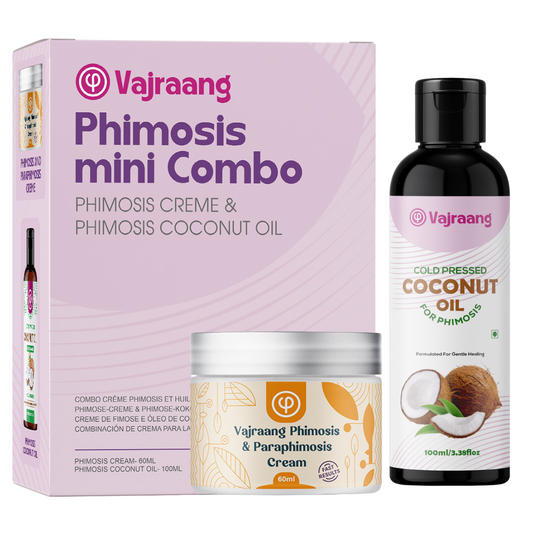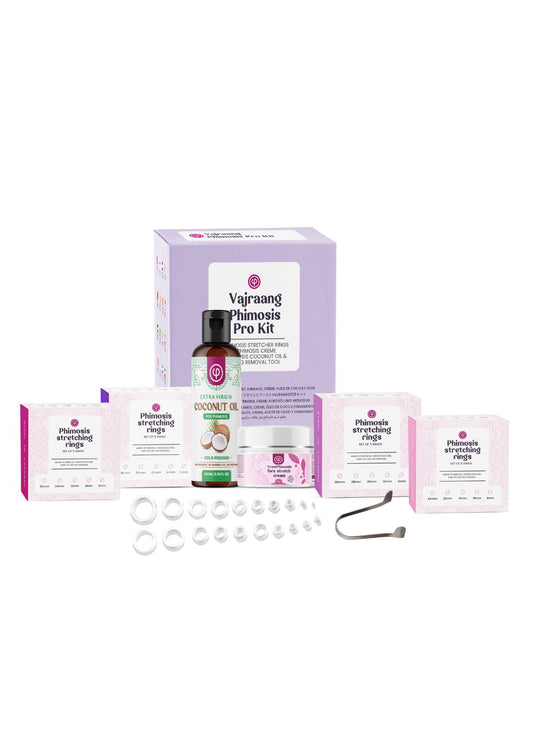
No — not necessarily. Circumcision is not the only treatment for phimosis, and according to international clinical guidelines, it should not be the first one offered. Conservative treatment combining topical cream with manual stretching achieves success rates of 85–96% in peer-reviewed studies.
If you walked out of a doctor's appointment with a referral for circumcision and a feeling you couldn't quite name, somewhere between relieved someone finally saw the problem and terrified at what solving it required, that feeling is worth paying attention to.
You received a recommendation. You may not have received a complete consultation. There is a difference. This article covers what a proper phimosis consultation should have included, what phimosis conservative treatment evidence actually says, the four options available to you, and the 13 questions to take to your next appointment.
The Consultation You Should Have Received
A thorough consultation for phimosis covers five things. If yours didn't include all five, you were given an incomplete picture.
1. Your Severity Grade
Phimosis exists on a spectrum. Your grade determines which treatment is appropriate and what the realistic success rate of phimosis conservative treatment is at your severity level. Most brief consultations skip this assessment entirely.
| Grade | What It Means | Conservative Treatment Outlook |
|---|---|---|
| Grade 1 | Full retraction, tight behind the glans | Excellent — high success with consistent practice |
| Grade 2 | Partial glans exposure only | Very good — most cases resolve conservatively |
| Grade 3 | Meatus visible, glans not exposed | Good — majority respond to cream + stretching |
| Grade 4 | Slight retraction only | Moderate — benefits from prescription steroid combination |
| Grade 5 | No retraction whatsoever (pinhole) | Longer timeline — medical guidance essential |
Not sure which grade you are? Take a quiz to know →
2. Physiological vs Pathological Phimosis
Physiological phimosis is the foreskin that simply hasn't loosened and responds well to conservative treatment. Pathological phimosis caused by BXO (Balanitis Xerotica Obliterans), characterised by white hardened patches of skin, may require a different approach. These are not the same diagnosis. A complete consultation distinguishes between them.
3. Conservative Treatment Options
Topical steroid cream combined with manual stretching is first-line treatment according to published clinical guidelines. It is non-invasive, reversible, and achieves success in 85–96% of cases in published studies.[1] This should have been offered before any surgical option was discussed.
4. Surgical Alternatives to Circumcision
Circumcision is not the only surgical option for phimosis. Preputioplasty is a minor foreskin-preserving procedure which is clinically recommended as a surgical alternative for non-complicated phimosis.[3] It preserves the foreskin entirely and has a faster recovery. Most patients are never told this exists.
5. Time
Phimosis is not a medical emergency in the vast majority of cases. You have time to trial conservative treatment. Any consultation that creates urgency around an elective, irreversible procedure without first establishing that non-surgical options have been genuinely trialled deserves to be questioned.
A large UK clinical series found that out of 600+ patients referred with phimosis, only 95 ultimately required surgical intervention after failing conservative treatment — fewer than 1 in 6. The majority were managed successfully without surgery.[5]
The Four Treatment Options: Honestly Assessed
Every man with phimosis has four options. A complete consultation presents all of them. Here they are, with honest clinical context for each.
Manual Stretching + Topical Cream
Daily gentle stretching of the foreskin opening combined with a topical preparation to improve foreskin elasticity. Sessions of 10–15 minutes, once or twice daily.
✓ Success rate: 85–96%Prescription Topical Steroids
Betamethasone 0.05% applied to the phimotic ring twice daily. Softens tissue and significantly enhances stretching effectiveness. Requires a prescription.
✓ Success rate: 67–95%Preputioplasty
A minor surgical procedure that widens the foreskin opening without removing it. Local anaesthetic. Faster recovery than circumcision. Foreskin fully preserved.
✓ Foreskin preserved entirelyCircumcision
Surgical removal of the foreskin. Resolves phimosis permanently. Appropriate when BXO is confirmed or conservative treatment has genuinely failed after 12 weeks.
⚠ Irreversible — consider alternatives firstSurgery remains available after conservative treatment. The reverse is not true. A 12-week trial of consistent conservative treatment preserves every option you currently have.
The 90-Day Conservative Treatment Protocol
Before committing to an irreversible procedure, a genuine trial of phimosis conservative treatment means 8–12 weeks of consistent daily practice. This is the same method that produces the 85–96% success rates cited in published clinical research.[2]
What to Expect Week by Week
-
Weeks 1–2
Little to no visible change. This is normal and expected. The tissue is adapting before it responds visibly. This is where most men quit — and where nearly all treatment failures originate. Do not stop here.
-
Weeks 3–6
First measurable change for most men with Grade 2–4 phimosis. Slightly more movement, slightly less resistance. Compare honestly against your starting point.
-
Weeks 5–10
The primary progress window. Retractability improves measurably. Maintain or increase session frequency. Do not reduce consistency here.
-
Weeks 11–12
Assessment point. Any measurable improvement means the treatment is working — continue. No change at all after 12 genuinely consistent weeks means see a urologist. Surgery remains available. You will now have 12 weeks of real evidence to inform that conversation.
A 2000 study in Urology[2] found 90% success at 6-month follow-up — and noted that every single treatment failure occurred in men who were non-compliant with daily practice. Consistency is the only variable that matters.
For a detailed step-by-step walkthrough, read the
Typical phimosis conservative treatment progress timeline across 12 weeksThe Psychological Reality Your Doctor Likely Didn't Address
A 2022 study examining the impact of phimosis on adult men found that 79% had impaired sexual onset, 69% experienced significant anxiety, 66% avoided sexual activity, and 46% avoided romantic relationships entirely because of this condition.
These are not incidental statistics. They are the documented cost of an undertreated condition surrounded by cultural silence. The physical and psychological outcomes of phimosis treatment are not separate; resolving the physical condition consistently improves the psychological one.
For a full discussion of this topic, read What Are the Psychological Effects of Living with Phimosis, and How Can They Be Managed? →
13 Questions to Take to Your Next Appointment
Print this list. Take it to your consultation. A doctor who is confident in their recommendation will welcome every one of these questions.
About Your Diagnosis
- What grade or severity of phimosis do I have? Your grade determines your options and realistic success rates.
- Is there any sign of BXO or scarring? This changes the treatment picture significantly.
- Is my phimosis physiological or pathological? Two different causes: two different treatment paths.
- Is this a medical urgency or an elective decision? In most cases, phimosis is not an emergency. Confirm this clearly.
About Treatment Options
- Have you considered topical steroid cream as a first-line option? Ask specifically. If the answer is no, ask why not.
- What is the realistic success rate of conservative treatment at my severity level? A urologist familiar with the literature should know this number.
- Am I a candidate for preputioplasty rather than circumcision? If they say no, ask them to explain the specific reason.
- What happens if I trial conservative treatment for 12 weeks first? Surgery remains available after. Establish the fallback clearly.
- Would prescription betamethasone alongside stretching improve my success rate? Combined treatment consistently outperforms either approach alone.
About Surgery, If It Comes to That
- How many preputioplasties have you personally performed? Experience with the specific procedure matters. It is a fair question.
- What will recovery look like specifically for my case? Not the generic answer. Your situation, your timeline.
- Is there any genuine medical reason I cannot trial conservative treatment first? Unless BXO is confirmed or there is active infection, usually no.
- Can I get a second opinion before deciding? You are entitled to one. A good doctor will support this.
The One Thing Worth Knowing Before You Decide
Surgery is available after conservative treatment. The reverse is not true.
A 12-week trial of consistent phimosis conservative treatment costs time and effort — nothing else. Every option you currently have, including circumcision and preputioplasty, remains available to you on Day 90 if the conservative approach genuinely fails.
Making an irreversible decision before trying a reversible one is the only sequence that cannot be undone.
20 questions · Your starting ring size · Step-by-step recovery plan
Take the Quiz →Frequently Asked Questions
Do I have to get circumcised for phimosis?
No. International clinical guidelines recommend conservative treatment, topical steroid cream combined with manual stretching as first-line therapy before surgery. Peer-reviewed studies report success rates of 85–96%.[1] Circumcision is appropriate when conservative treatment has genuinely failed after a 12-week consistent trial, or when BXO is confirmed.
What should I do if my doctor says I need circumcision?
Ask specifically whether conservative treatment has been discussed, what your phimosis grade is, whether BXO is present, and whether preputioplasty is an option. Request time to trial conservative treatment first. You are entitled to seek a second opinion, a doctor confident in their recommendation will welcome these questions.
How long should I try conservative treatment before considering surgery?
A minimum of 8–12 weeks of genuinely consistent daily practice. If there is no measurable change after 12 consistent weeks, a urologist consultation about prescription topical steroids or surgical options is the appropriate next step. Two inconsistent weeks does not constitute a failed trial.
What is preputioplasty and why hasn't my doctor mentioned it?
Preputioplasty is a foreskin-preserving surgical procedure that widens the preputial opening without removing the foreskin. Current clinical recommendations list it as the preferred surgical option over circumcision for non-complicated phimosis.[3] It is mentioned less frequently because patient awareness is low and most surgeons have more training in circumcision.
Can phimosis be cured without surgery?
Yes, in the majority of cases. A 2005 trial found 96% complete resolution combining betamethasone cream with stretching.[1] A 2000 study found 90% success at 6-month follow-up, and noted that every failure occurred in men who were non-compliant with daily practice.[2]
Does phimosis cause anxiety?
Yes, this is documented in clinical research. A 2022 study found that 69% of adult men with persistent phimosis experienced significant anxiety, and 46% avoided romantic relationships entirely as a result. Resolving the physical condition consistently improves psychological outcomes.
What is BXO and does it change my treatment options?
BXO (Balanitis Xerotica Obliterans) causes hardening and scarring of foreskin tissue, the one situation where conservative treatment often has limited effectiveness. Signs include white, hardened, or shiny patches on the foreskin. If BXO is present, confirm the diagnosis with a specialist before proceeding, as it is sometimes misidentified in brief consultations.
Is phimosis a medical emergency?
In almost all cases, no. The single exception is paraphimosis, where a retracted foreskin cannot return to its position which requires immediate emergency medical attention. Standard phimosis is a chronic condition that can be addressed without urgency.
- Zampieri N, Corroppolo M, Camoglio FS, et al. Phimosis: stretching methods with or without application of topical steroids? J Pediatr. 2005;147(5):705–6. PMID 16291369 →
- Orsola A, Caffaratti J, Garat JM. Conservative treatment of phimosis in children using a topical steroid. Urology. 2000;56(2):307–310. PMID 10925099 →
- Osmonov D, Hamann C, Eraky A, et al. Preputioplasty as a surgical alternative in treatment of phimosis. Int J Impot Res. 2022;34(4):353–358. PMC9117135 →
- Morris BJ, Matthews JG, Krieger JN. Prevalence of phimosis in males of all ages: systematic review. Urology. 2020;135:124–132. PMID 31655079 →
- Golubovic Z, Milanovic D, Vukadinovic V, et al. The conservative treatment of phimosis in boys. Br J Urol. 1996;78(5):786–8. PMID 8976781 →